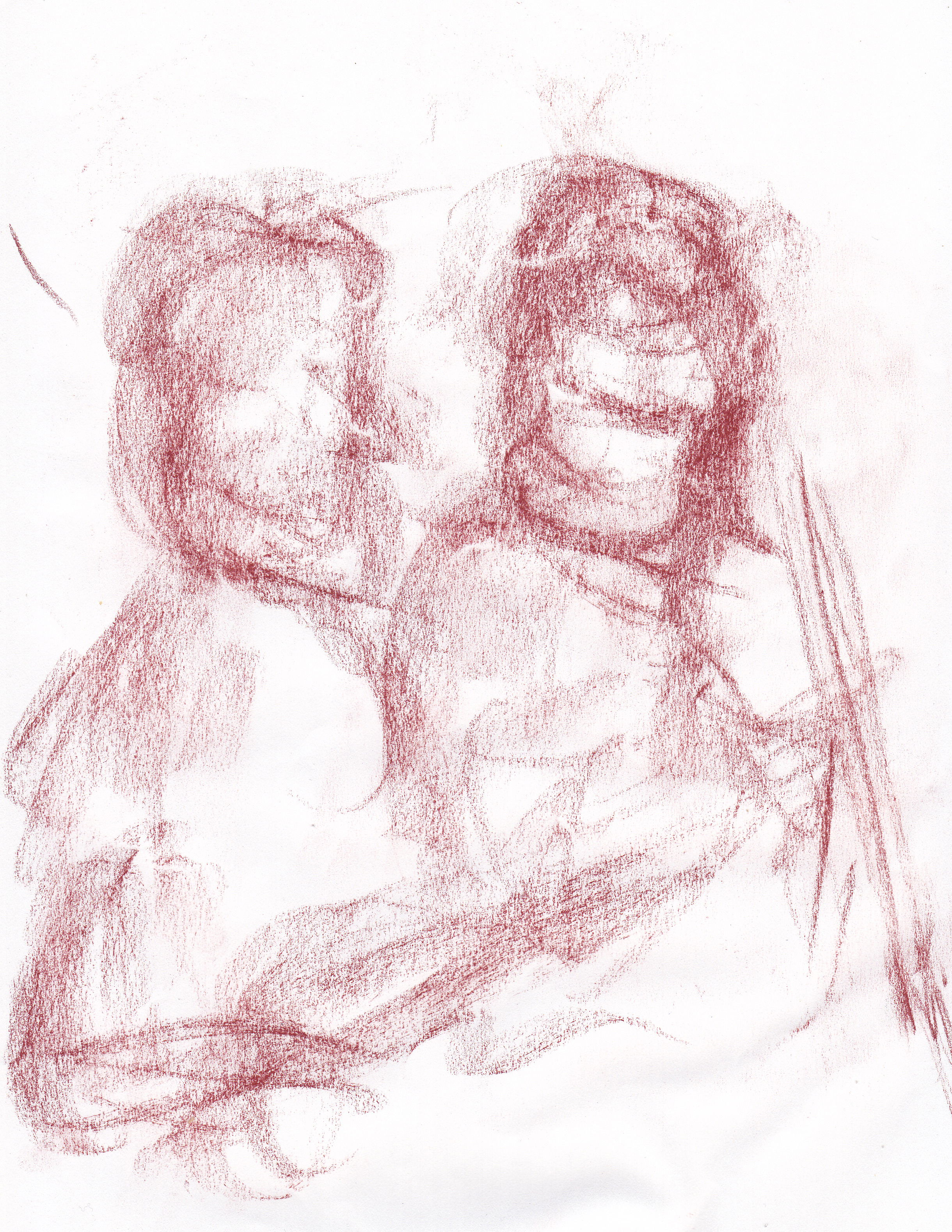
Do not press me to leave you or to turn back from following you! Where you go, I will go; Where you lodge, I will lodge; your people shall be my people, and your God my God.
This is a very familiar passage. It is often quoted at wedding ceremonies, when two people, about to face the bonds of matrimony, say this to each other.
Yet we see, from this passage that it was said by a woman, to another woman, who was her mother-in-law.
Ruth, a Moabite, that is, a citizen from a country despised by Israelites, a woman, an orphan and a widow. Her mother-in-law Naomi was also a widow and then she lost both of her sons.
In those days, a husband was security in that the man was meant to protect the woman he married. Even an unmarried woman would find security if she were to bear a son or sons.
So Ruth, the widow and Naomi, her mother-in law were both vulnerable women. The vulnerable reaching out to the vulnerable.
Do not press me to leave you or to turn back from following you! Where you go, I will go; Where you lodge, I will lodge; your people shall be my people, and your God my God.
Solidarity
These were words spoken by a vulnerable woman to another vulnerable woman. This was solidarity.
What is solidarity?
Lilla Watson is a Murri, a visual artist, an activist, a Gangulu woman who grew up in the Dawson River region of Central Queensland, her “Mother’s Mother’s country.”
Lilla is often credited with the quote:
“If you have come here to help me, you are wasting your time. But if you have come because your liberation is bound up with mine, then let us work together.”
This quote has served as a motto for many activist groups in Australia and even here in Canada. Watson was heard delivering this quote at the 1985 United Nations Decade for Women Conference in Nairobi. [Yes – I was there at that time.] However, the origins of the quote date back further. She has explained that in the early 1970s she had been part of an Aboriginal Rights group in Queensland. Together they came up with the phrase. For this reason, she is not comfortable being identified as the sole author.
 DP Community Minister's Blog